Middle East & GCC
K-12 education investment in the Middle East.
Young populations, rising incomes and strong demand for international curricula make the Middle East one of the world's most attractive regions for K-12 school investment. FBC Investment develops Finnish British international schools for this demand.

Market overview
A growing market for international K-12 schools.
Across the Middle East, families increasingly choose private and international schools that offer globally recognised qualifications and a modern learning experience. In the Gulf Cooperation Council (GCC) alone, K-12 enrolment is projected to reach 12.9 million students by 2029, according to Alpen Capital.
Egypt has the largest school system in the region, with around 25 million pre-university students. Demand for high-quality international schools in Egypt continues to outpace supply, especially in fast-growing new cities and residential communities.
Governments are also encouraging private investment in education. Saudi Arabia's Vision 2030, for example, promotes greater private-sector participation in the education sector, creating new opportunities for experienced school developers and operators.
K-12 students projected in the GCC by 2029
Alpen Capital, 2025
Projected annual growth in GCC K-12 enrolment, 2024 to 2029
Alpen Capital, 2025
Pre-university students in Egypt
Ahram Online, 2026
Market drivers
Why invest in K-12 schools in the Middle East.
Young, growing populations
Large and growing school-age populations across Egypt, Saudi Arabia and the wider region create sustained demand for new school places.
Demand for international qualifications
Parents increasingly choose IGCSE, IB and American Diploma pathways that prepare their children for leading universities worldwide.
Support for private education
National reform programmes, including Saudi Arabia's Vision 2030, encourage private-sector investment in schools and education services.
Room for differentiated schools
Families want more than exam results. A Finnish-model school, with its focus on wellbeing and modern teaching, stands out in a competitive market.
Schools for new cities
Large residential and mixed-use developments need high-quality schools, creating partnership opportunities with real estate developers.
Long-term, resilient demand
Education is a priority for families in every economic cycle, supporting stable enrolment and long-term returns for well-run schools.
Where we are active
Our Middle East K-12 focus markets.
Six Finnish British schools
Our flagship programme: six international schools across Egypt, with the first school coming soon. See the Egypt project
Vision 2030 opportunities
We evaluate school development and operating partnerships aligned with the Kingdom's drive to expand private education.
International school demand
We assess opportunities for Finnish-model international schools in the UAE, Qatar, Kuwait, Bahrain and Oman.
Our approach in the region
How we develop schools in the Middle East.
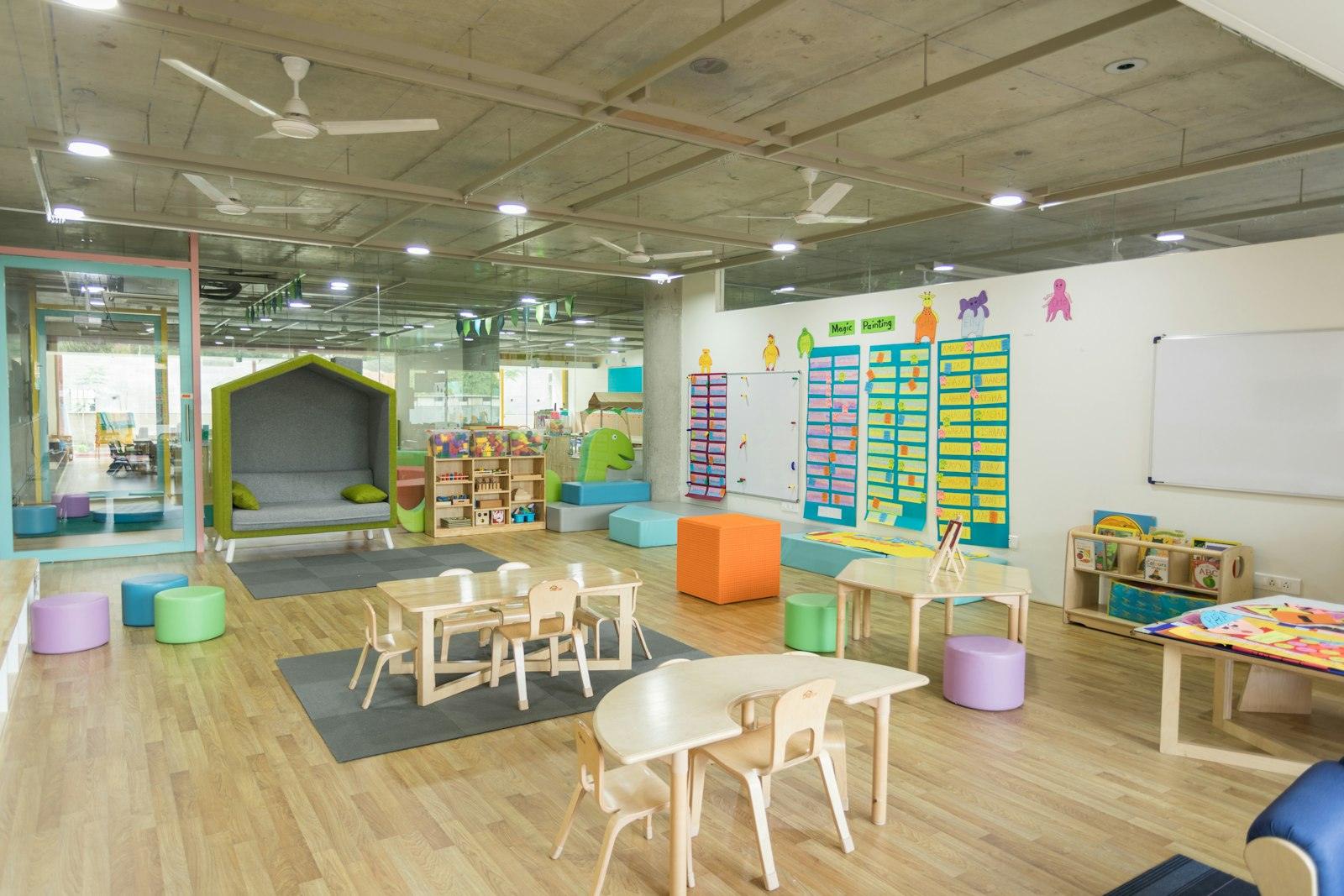
Every Middle East project starts with a detailed feasibility study covering local demand, competition, fee levels and regulation. We then design the school with architects and Finnish education specialists, manage licensing with local authorities, and oversee construction.
Before opening, we recruit and train teachers in Finnish pedagogy and the school's chosen curricula, and we run a pre-opening enrolment campaign. After opening, we continue to manage operations, quality and growth.
Investors can take part through a joint venture, full ownership with FBC as operator, a turnkey school, or a franchise. Compare our partnership models or read more about K-12 education investment.
Questions
Middle East education investment: FAQs.
Is K-12 education a good investment in the Middle East?
The Middle East combines young, growing populations with strong demand for international qualifications and government support for private education. Well-located, well-run K-12 schools can deliver stable, long-term returns, although every investment carries risk and should be supported by a detailed feasibility study.
Which Middle East countries does FBC Investment focus on?
Our flagship programme is six Finnish British international schools in Egypt. We also evaluate opportunities in Saudi Arabia, the UAE and the wider GCC.
What curricula do FBC schools in the Middle East offer?
Our schools offer internationally recognised pathways, including IGCSE, the IB and the American Diploma, delivered with Finnish teaching methods and in line with local regulations.
Can FBC Investment partner with real estate developers?
Yes. We work with developers to plan, build and operate schools within new residential and mixed-use communities, adding long-term value to their projects.
Book your free consultation
Explore K-12 school investment and partnership opportunities.
Our team will walk you through current school projects, partnership models and the markets we are developing in across the Middle East, Africa and Europe.